Happy Mandala: A Refined Script Font for Elegant Branding
I was staring at a blank brand board last Tuesday, coffee going cold beside my monitor. The client wanted a visual identity for a boutique skincare line that felt expensive but approachable—luxury without the intimidation factor. I had tried three different sans serif options and two classic serif fonts, but everything felt either too clinical or too traditional. That’s when I pulled up Happy Mandala. As soon as I typed out the brand name, the mood shifted. It wasn’t just text anymore; it was an attitude.
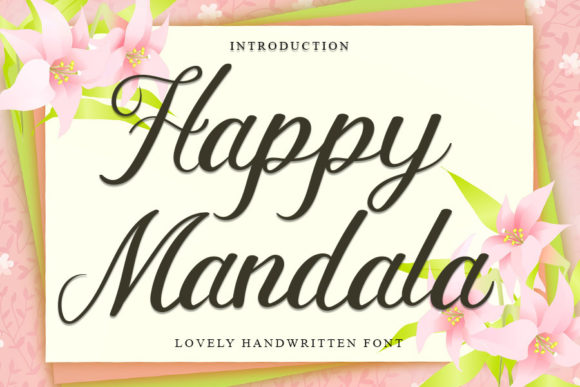
Happy Mandala is a chic, refined script font that emanates sophistication and elegance. In a market flooded with overly swirly, hard-to-read handwritten styles, this typeface stands out because it respects the balance between artistic flair and legibility. It belongs to the Script Amp collection, a curated group of Fonts designed for designers who need reliability alongside beauty. After testing it across a logo draft, packaging mockup, and social media layout, I can confidently say it earns its place in my primary toolkit.
Visual Personality and Design Nuances
The first thing you notice about Happy Mandala is its fluidity. The strokes connect naturally, mimicking the rhythm of high-quality calligraphy without the inconsistency of actual hand-lettering. It has a medium contrast in stroke weight, which gives it enough presence to stand alone as a logo mark but enough delicacy to feel feminine and soft. It doesn’t shout; it whispers confidently.
What truly sets this premium font apart, however, are the technical details. The stylish alternates and ligatures make this font the perfect match for any project where customization matters. When I was working on the skincare logo, I didn’t just use the default characters. I swapped out the capital ‘S’ for a more open alternate and used a contextual ligature for the ‘th’ combination. These small adjustments transformed a standard wordmark into a bespoke design asset. For brand designers, this level of control is invaluable. It allows you to tailor the typography so it feels unique to the client, rather than something they could have typed out in a word processor.
Performance in Real-World Branding Applications
I tested Happy Mandala across several touchpoints to see how it held up under different constraints. Here is how it performed in realistic scenarios:
- Logo Design: It shines here. The connected letters create a cohesive unit that works well as a central brand mark. It scales reasonably well, though I recommend keeping it large enough to preserve the fine details of the swashes.
- Packaging Design: On a matte black box with foil stamping, the font looked incredible. The elegance of the script contrasted beautifully with the minimal packaging structure. It elevated the perceived value of the product instantly.
- Social Media Graphics: For Instagram quotes or promotional headers, it adds a human touch. However, I found it works best for short phrases. Using it for long captions reduces readability, so I paired it with a clean sans serif for body text.
- Business Cards: Used for the name and title, it created a lovely hierarchy. It draws the eye immediately, making the card feel personal and high-end.
In terms of web design, Happy Mandala works wonderfully for hero sections or pull quotes. It adds emotional resonance to a homepage. However, I would avoid using it for navigation menus or small footer text. Its decorative nature means it loses clarity at very small sizes or on low-resolution screens.
Strategic Font Pairing Advice
A script font like Happy Mandala rarely works in isolation. To build a complete modern typography system, you need supporting typefaces that ground its elegance. During my project, I experimented with a few combinations:
- With a Geometric Sans Serif: This was my winner. The clean, straight lines of a geometric sans provide a modern counterpoint to the organic curves of the script. It keeps the brand feeling contemporary rather than vintage.
- With a Classic Serif: If you want a more traditional, editorial look, pairing it with a high-contrast serif font works well. This combination feels literary and sophisticated, suitable for book covers or luxury hospitality branding.
- Avoid Pairing with Other Scripts: Generally, mixing two script fonts creates visual chaos. Let Happy Mandala be the star. Use simple, neutral fonts for everything else to maintain visual hierarchy and professionalism.
The key is contrast. Since Happy Mandala is decorative and fluid, your secondary font should be static and structured. This ensures consistency and helps guide the viewer’s eye through the design assets without overwhelming them.
Limitations and Practical Considerations
While I love this typeface, it is not a universal solution. It is primarily a display font. Do not attempt to use it for long-form body text, legal disclaimers, or dense informational brochures. Readability suffers when the letters connect over multiple lines, and the intricate swashes can become visual noise at small point sizes.
Additionally, consider the industry context. While it is perfect for beauty, fashion, weddings, lifestyle blogs, and artisanal food brands, it may not suit corporate finance, heavy industrial manufacturing, or tech startups aiming for a utilitarian aesthetic. Brand perception is powerful; using a delicate script in a serious B2B context might undermine the authority you are trying to establish.
Before finalizing any client work, always test the font in its intended environment. Print a proof. Check it on mobile devices. Ensure the ligatures are rendering correctly in your design software. Happy Mandala includes various file formats, but always verify webfont availability if you are implementing it on a live site to ensure fast loading times and cross-browser compatibility.
Licensing and Final Verdict
One crucial step many creatives skip is reviewing the license. Before using Happy Mandala in commercial projects, such as client logos, merchandise, or digital products, check the specific commercial font licensing terms provided by Script Amp. Some licenses cover print and web but exclude embedding in apps or resale in templates. Protecting yourself and your client from legal issues is part of professional practice.
In conclusion, Happy Mandala is a versatile and elegant addition to any designer’s library. It bridges the gap between artistic expression and commercial viability. Whether you are refreshing a café’s visual identity or designing a new line of handmade candles, this font offers the sophistication needed to elevate your work. It is not just about making things look pretty; it is about communicating quality and care through typography. If you are looking for a creative font that delivers both style and substance, give this typeface a try in your next project.